Medical neurostimulation by Transcranial Magnetic Stimulation
Repetitive Transcranial Magnetic Stimulation (rTMS) is defined by the Haute Autorité de Santé (HAS, framework note p. 3) as a non-invasive medical neurostimulation therapeutic act seeking to modulate the excitability of certain areas of the brain in order to improve the symptoms of neuropsychiatric disorders such as depression. In other words, through repeated magnetic impulses, it is possible to modify brain metabolism to treat a pathology affecting the brain without being invasive.
The effects of this technique have been studied since 1985. Without the need for anesthesia, this treatment involves focused and repeated magnetic stimulations directed at a brain region involved in the mechanism of a neuropsychiatric disorder.
The aim of rTMS in the treatment of depression is not to completely replace existing medications, but to enhance their effects to achieve a therapeutic response (a reduction of symptoms by half), or better, remission (complete disappearance) and prevent a depressive relapse.
For healthcare professionals (or patients) wishing to learn more, we invite you to visit the Pro Space page, which provides more in-depth scientific information and access to a specialized bibliography on the subject.
For whom? Which pathologies are concerned?
This technique is used in several medical specialties: psychiatry, neurology (post-stroke, MS, myelopathy, Alzheimer’s disease, Parkinson’s disease, etc.), pain medicine (neuropathic pain, fibromyalgia, chronic pain, etc.). Not all pathologies are accessible to this treatment; within the cabinet, we primarily treat resistant depressions, neuropathic pain, and in certain cases, after specialized assessment and consultation, other types of disorders (OCD, addictions, anxiety disorders in particular, but also treatment-resistant hallucinations of schizophrenia and post-traumatic stress).
rTMS can be useful in other situations:
- Refusal of medication
- Medication intolerance
- Medication contraindications
How does treatment proceed in the cabinet?
The duration and frequency of sessions vary according to the clinical situation. For example, the typical treatment for depression consists of five sessions per week over six weeks.
- A psychiatrist specialized in rTMS will meet you for an initial evaluation interview to determine the appropriate therapeutic protocol (frequency, duration, location, and type of neurostimulation).
- Each day of the treatment, you will be received by an operator who will accompany you throughout the session.
- Specialized psychiatric follow-up is provided several times a week during the entire duration of the treatment. These are standardized interviews aimed at reassessing and adjusting the protocol to make it as personalized as possible.
- At the end of the treatment, "consolidation" or "maintenance" sessions may be prescribed if your situation warrants it.
Risks? What are the side effects?
- Headaches, pain: this is the main discomfort related to the technique, found in only one patient out of two. The painful sensation is mild and easily controlled by a standard pain reliever (e.g., paracetamol).
- Neurological signs: there is a risk of seizure primarily in patients with a history of epilepsy. The risk is estimated to be about 1 in 35,000 sessions.
- Fatigue: during the treatment, some patients may report fatigue (the brain is the organ that consumes the most energy in the human body).
- Treatment discontinuation: less than 1% of patients stop their treatment. This is one of the techniques with one of the best adherence rates.
Precautions for use?
- Cochlear implant: this is the only formal contraindication to the treatment.
- Other implantable devices: the benefit-risk balance must be evaluated by the specialist doctor to determine whether the treatment can be used, particularly in the case of pacemakers and implanted brain stimulators.
- Epilepsy: even in cases of epilepsy, treatment can be proposed after specialized medical evaluation.
What do scientific studies say?
Studies are clear: 60 to 80% of patients treated with rTMS show improvement from the technique.
This improvement can mean two things: either a response to treatment (a twofold reduction of symptoms), which is the case for 30 to 53% of patients, or remission (complete disappearance of symptoms), which is the case for 30% of patients. (According to Lefaucheur et al. 2020)
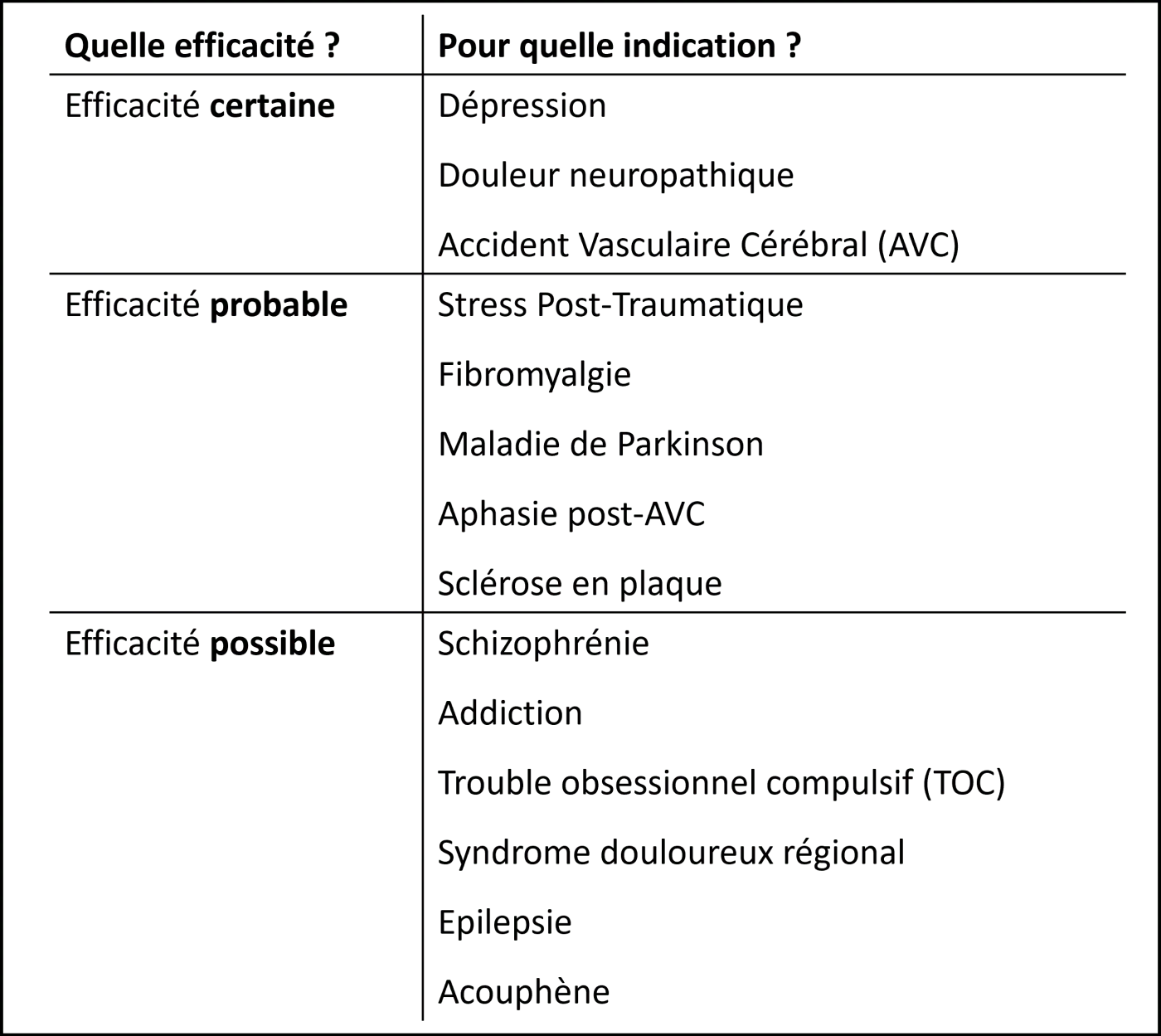
According to Lefaucheur et al. 2020
At least 2 weeks are needed for a therapeutic effect to be found, and current recommendations favor treatments of at least 30 sessions for the therapeutic effect to be maximal.
The other main disorders that have the best level of evidence are: neuropathic pain, fibromyalgia, Parkinson’s disease, rehabilitation after a stroke (upper limb paralysis), post-traumatic stress.
Bibliographic references are available on the page dedicated to healthcare professionals.
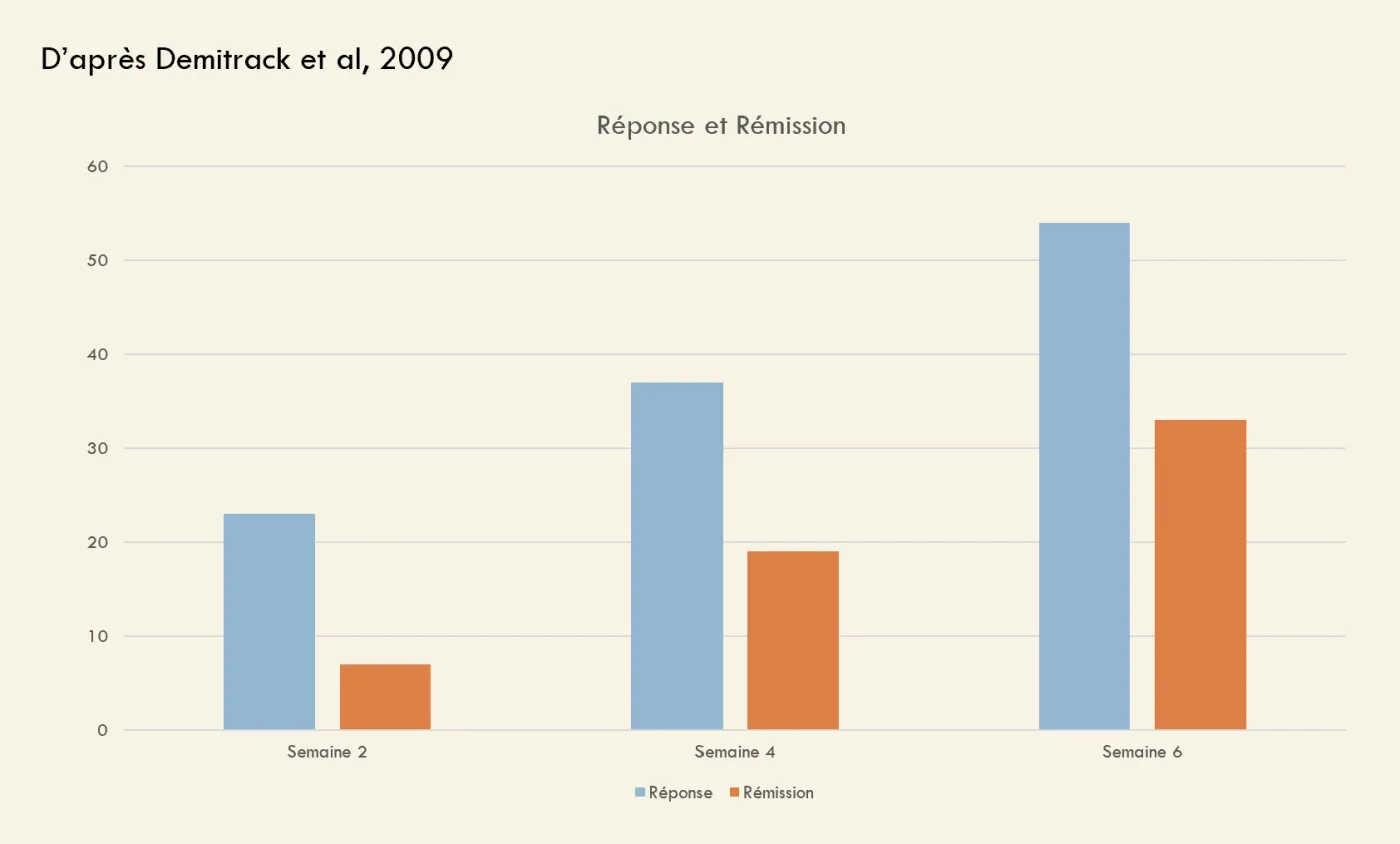
According to Demitrack et al. 2009
Frequently asked questions
Other questions often asked.
Does rTMS lead to memory problems?
No. Unlike electroconvulsive therapy (ECT), rTMS does not impair cognitive functions. Some studies have found, on the contrary, an improvement in these functions, with several ongoing trials of rTMS to treat neurodegenerative diseases (Alzheimer’s, Mild Cognitive Impairment, etc.). A promising article on rTMS for the treatment of Alzheimer’s disease is summarized here. rTMS has also been successfully used in a case report on Korsakoff's syndrome.
Is rTMS possible during pregnancy?
Yes and No. Numerous studies have demonstrated the safety of rTMS for the treatment of pregnant women, and a synthesis of references is provided here, with good effectiveness on peripartum depression, but a few articles mention a risk of premature birth. We are therefore awaiting the official recommendations from French learned societies on the subject, which have not yet pronounced on this question at this time. It is possible to benefit from this technique during pregnancy in certain university hospitals.
Is rTMS performed on children?
Yes and No. The use of rTMS in France in children and adolescents remains exceptional and reserved for very specific contexts of specialized care, and requires a multidisciplinary consultation meeting (RCP). In the USA, rTMS is authorized (and recommended) for adolescent depression. In Spain, there are care networks using this technique for autism spectrum disorders.
Is rTMS compatible with medication treatments?
Yes, rTMS is perfectly compatible with medication treatments. It is often offered as a complement to medications, particularly when they are not sufficient to relieve symptoms. Generally, it is not necessary to stop or modify ongoing treatments before starting a course of rTMS, unless otherwise indicated by the doctor.
Are there profiles of "good" or "poor" responders?
Yes, certain characteristics can influence the response to rTMS, but no single criterion reliably predicts who will respond. Patients with treatment-resistant depression but still some emotional reactivity, or those whose symptoms have evolved for a shorter time, sometimes respond better. Research is ongoing to identify biomarkers of response (by EEG, MRI, clinical phenotype, etc.), but in practice, rTMS can be proposed to any eligible patient after evaluation by a specialist.
Is it possible to undergo several courses?
Yes, it is entirely possible to undergo multiple courses of rTMS during a patient's life. Recurrences may sometimes occur several months after an initially favorable response: in this case, a new course can be proposed, with response rates similar to or even higher than the first. Some teams also offer reminder or maintenance sessions, spaced out, as relapse prevention. Each decision is personalized based on the patient's clinical progress.
Is rTMS painful?
Yes and No. rTMS is not considered painful by 75% of patients. It may cause a feeling of tingling or tapping on the scalp, at the site being stimulated. Some people describe discomfort or fatigue after the first sessions, which generally subsides within one or two weeks. In some cases, a slight headache may occur after the session, easily relieved by a standard painkiller. The vast majority of patients tolerate the treatment well. Furthermore, this technique is starting to be used for treatment-resistant migraines and headaches.
Is rTMS reimbursed?
No. rTMS is currently not reimbursed in France because there is no recognized act in the nomenclature. It is currently reimbursed in many countries: USA, Canada, Luxembourg, Germany, Australia, Japan, etc. In France, there has been a debate on the reimbursement of the technique since 2022, and medical-economic studies are ongoing to assess the relevance of reimbursement within the French healthcare system.